Understanding Code Ownership in Software Development Projects
Learn why code ownership matters in software projects, how to spot problems early, and practical steps to improve it in your organisation.

The importance of code ownership in software development
Code ownership means clearly knowing who is responsible for each part of your software. It matters because responsibility drives quality, makes changes safer, and keeps your project maintainable as it grows. Without it, decisions slow down and risks increase.
In many software projects, ownership is fuzzy: different people assume others are responsible, or whole areas of code sit in a grey zone. This is where bugs slip through, quick fixes pile up, and nobody feels fully accountable for long-term health. Over time, that uncertainty turns into higher costs and stalled progress.
Clear ownership connects people to specific outcomes. When developers understand which modules, services or features they are responsible for, they are more likely to design carefully, think ahead and notice problems early. Questions have a natural home, instead of bouncing around teams.
Ownership also supports consistent technical decisions. If the same small group looks after an area of the code, patterns are more likely to stay coherent. That consistency reduces the learning curve for new team members and lowers the chance of unexpected side effects when changes are made.
From a business perspective, code ownership is about control and continuity. It makes it easier to answer basic questions such as who can explain this part of the system, who should review changes, and who understands the risks of altering a critical path. Without those answers, planning becomes guesswork.
Many businesses feel this most strongly when they try to scale or hand over work. If knowledge is scattered and ownership is unclear, even simple changes can require a long investigation. Strong ownership practices turn that situation around and provide a foundation for reliable delivery.
Identifying code ownership issues
Before you can improve ownership, you need to recognise where it is weak. Specific, visible symptoms often show up long before a serious incident. Paying attention to them can save time and prevent disruption later.
Look for patterns in how your team talks about and works with the codebase. Ambiguity around decision-making, repeated delays in similar areas, or frequent rework are all warning signs that something structural is off. These symptoms are usually easier to spot than the underlying causes.
- People say “I’m not sure who owns this” when a bug appears or a change is requested.
- Pull requests sit unreviewed because nobody feels responsible for that part of the system.
- Several developers make uncoordinated changes to the same area, causing conflicts and regressions.
- Critical knowledge lives in one person’s head, and work slows down when they are unavailable.
- Similar bugs reappear in the same component, suggesting no one is watching patterns over time.
- Teams hesitate to touch certain modules because they are perceived as “risky” or “mysterious”.
Project delays often cluster around modules without clear ownership. When nobody feels confident to approve changes, each decision takes longer, and issues bounce between teams. That delay compounds when dependencies are unclear, because each blocked task can slow down many others.
Another useful signal is how incidents are handled. If post-incident discussions focus on who was at fault rather than which owner will address structural problems, ownership may not be well established. Healthy ownership looks more like: this is our area, here is how we will prevent this next time.
Prioritising code ownership challenges
Once you can see the ownership gaps, the next question is where to start. Not every problem carries the same risk, and trying to fix everything at once often spreads attention too thin. A deliberate order of work helps you address the most important issues first.
Projects are frequently derailed not because nobody saw the ownership problems, but because they were treated as background noise. The issues that most threaten delivery are usually tied to critical paths, high-change areas or modules with concentrated knowledge risk.
- Map your system into major components or domains and note which are most critical to business operations.
- For each component, assess the current level of ownership clarity: responsible individuals, review rules and documentation.
- Score components by risk, based on how often they change, how many incidents they see and how few people understand them.
- Identify where project delays or repeated defects are already showing up, and check how those align with high-risk components.
- Choose a small number of the highest-risk areas and define concrete ownership improvements for each, such as named owners or clearer review responsibilities.
- Revisit the map after a period of working this way and adjust the priorities as new information appears.
Focusing on impact rather than convenience is important here. It is tempting to start where change is easiest, but that often leaves the most fragile parts of the system untouched. A simple risk-based approach creates a clearer link between ownership work and project outcomes.
It also helps to treat this as an ongoing practice rather than a one-time clean-up. As products evolve, new features appear, teams change shape and old components decline in importance. Your ownership model should be reviewed with the same regularity as your roadmap and architecture.
Implementing effective code ownership practices
Improving ownership works best when it is woven into everyday development rather than handled as a side project. The goal is to make responsibility visible, practical and supported by the way the team already works, instead of adding layers of ceremony that people avoid.
A good starting point is to define what ownership actually means in your context. For many teams, it covers design decisions, code quality, reviewing changes, maintaining documentation and responding to incidents for a specific area. Writing this down avoids misunderstandings later.
Make ownership visible in the codebase
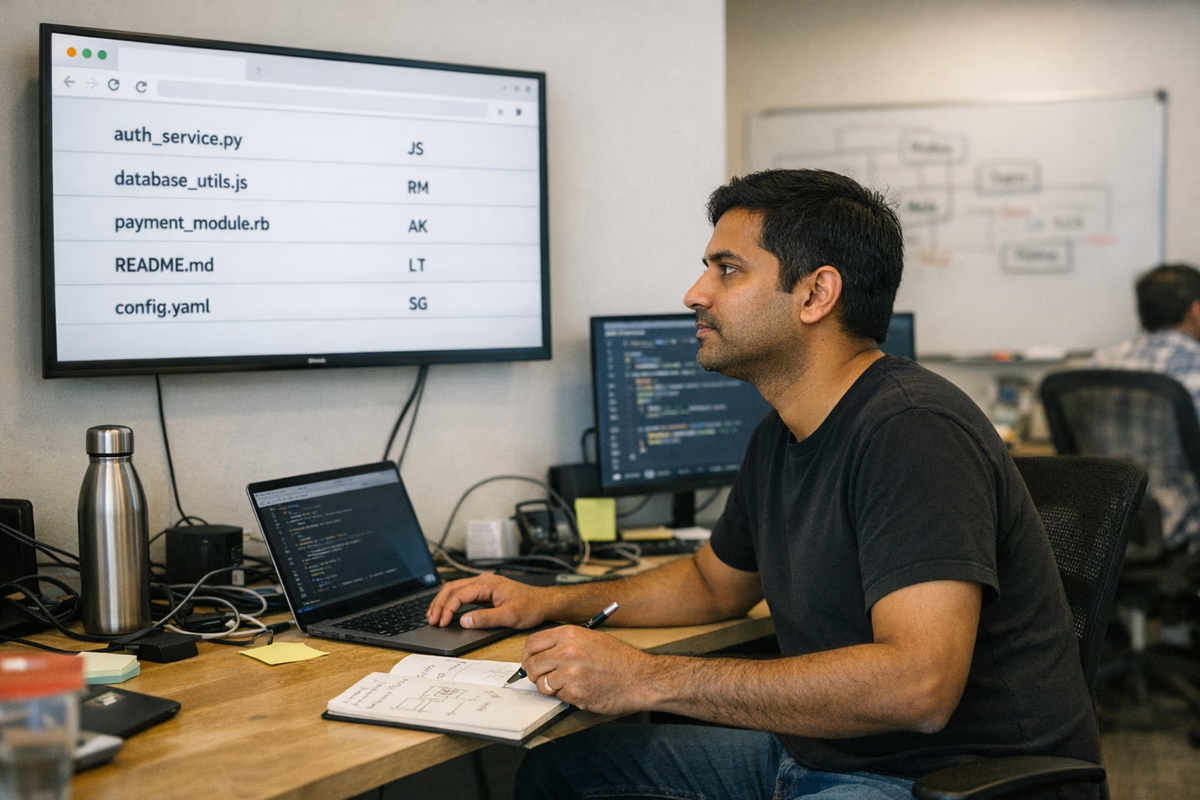
Attaching ownership information directly to the codebase keeps it close to where decisions happen. This can be as simple as keeping a clear map of which team or individual is responsible for each module or folder, and ensuring that map is updated when responsibilities change.
Linking ownership to your version control and review process also helps. For example, each area can have a default set of reviewers who understand its context, so changes receive informed feedback instead of generic approval. That structure reduces the chance of accidental drift in standards.
Support owners with habits, not just names
Ownership fails when it is only a label. Owners need time and space to care for their areas: reviewing design changes, paying down technical debt and improving tests. Building regular review points into the development cycle gives them an opportunity to do this work deliberately.
Clear communication channels matter as well. When questions come up about a particular feature or service, people should know exactly where to go and who to include. Over time, that pattern reinforces both accountability and trust within the team.
For organisations building or transforming complex products, strong ownership practices also make collaboration with an external engineering partner easier. When responsibilities are defined on both sides, it is simpler to coordinate work, make decisions and keep quality consistent across the codebase.
Evaluating the impact of code ownership on project success
To know whether your ownership efforts are working, you need to look at how they show up in day-to-day delivery. The goal is to connect clearer responsibility with concrete signs of a healthier product and smoother collaboration.
Some of the clearest signals appear in how work flows through your system. If changes in previously problematic areas start moving more predictably from idea to release, that suggests ownership and decision-making have become more stable. Reduced uncertainty around who decides what is often reflected in fewer stalled tasks.
Support and incident handling provide another useful lens. When ownership is clear, issues are routed quickly to the right people, and those people have the context to address not just the symptom but the underlying cause. Over time, this often leads to fewer repeated incidents emerging from the same modules.
While every organisation tracks different things, there are a few practical measures you can examine over time:
- How long changes in key components spend waiting for review or clarification.
- How often similar issues reappear in the same areas of code.
- How many areas depend heavily on a single individual for understanding or maintenance.
- How frequently work in critical modules causes unexpected knock-on effects elsewhere.
It is also worth listening to how teams talk about the system. As ownership improves, conversations usually shift from “who is supposed to handle this” to “how do we want to shape this area next”. That change in tone is a strong qualitative indicator that people feel connected to clear responsibilities.
Next steps for enhancing code ownership in your projects
Strengthening code ownership is not a one-off exercise; it is an ongoing part of how you develop and evolve software. The aim is to introduce small, deliberate changes that your teams can sustain as products grow more complex and expectations rise.
Many organisations find that the hardest part is simply having a shared picture of their system and where responsibilities begin and end. A simple roadmap can turn good intentions into practical progress.
- Document your key components and identify where ownership is clear, weak or unknown.
- Agree on a written definition of what “ownership” includes for your teams.
- Assign or confirm owners for the most critical areas, and make that information easy to find.
- Align your review process so that changes in each area involve someone who owns or understands it deeply.
- Schedule regular checkpoints to review ownership, especially after restructuring teams or shipping major features.
If you are planning a new product, introducing AI capabilities, or modernising an existing platform, code ownership is a useful topic to address early. During discovery and planning, clarifying who will own which areas can reduce friction later and make collaboration between business and engineering smoother.
RedLizard focuses on product engineering, AI product engineering and product transformation, and treats ownership as a core part of how software is designed, built and evolved. If you would like a structured conversation about how ownership could work in your product, you can share the details of your idea or existing system at the start-a-project page on our website; from there, the team can explore what a clear, practical ownership model might look like for you.